
Short answer: Yes—many pinched nerves can heal on their own if the pressure on the nerve is temporary and relatively mild. However, not every pinched nerve resolves without treatment. If the compression continues or symptoms worsen, the nerve may remain irritated and recovery can take much longer.
The key is understanding why the nerve is being compressed. A nerve that's irritated from sleeping in an awkward position is very different from one being compressed by a herniated disc or arthritis in the spine.
A pinched nerve occurs when surrounding tissues place excessive pressure on a nerve. This pressure can come from:
When a nerve is compressed, it cannot transmit signals normally. Even relatively small amounts of pressure can reduce normal nerve function, which is why symptoms often appear before any permanent damage occurs.
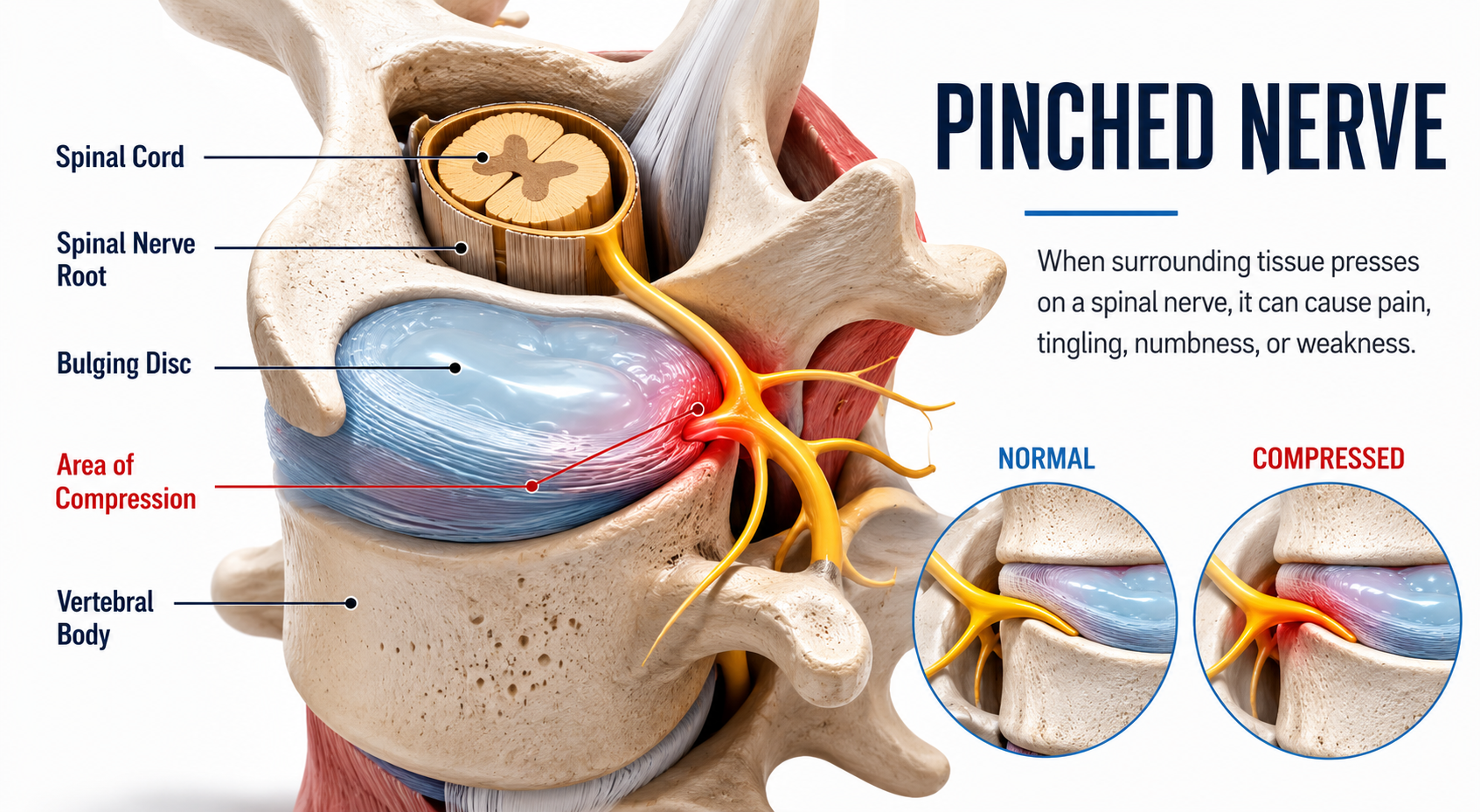
Symptoms depend on which nerve is affected, but commonly include:
A pinched nerve in the neck may cause symptoms into the shoulder, arm, or hand, while compression in the lower back may produce pain that travels into the buttock, thigh, calf, or foot.
In many mild cases, yes.
If the nerve is compressed because of temporary inflammation, poor posture, muscle tightness, or overuse, reducing the irritation often allows the nerve to recover naturally.
Many people notice improvement within several days or a few weeks by:
As pressure decreases, nerve function gradually returns and symptoms begin to improve.
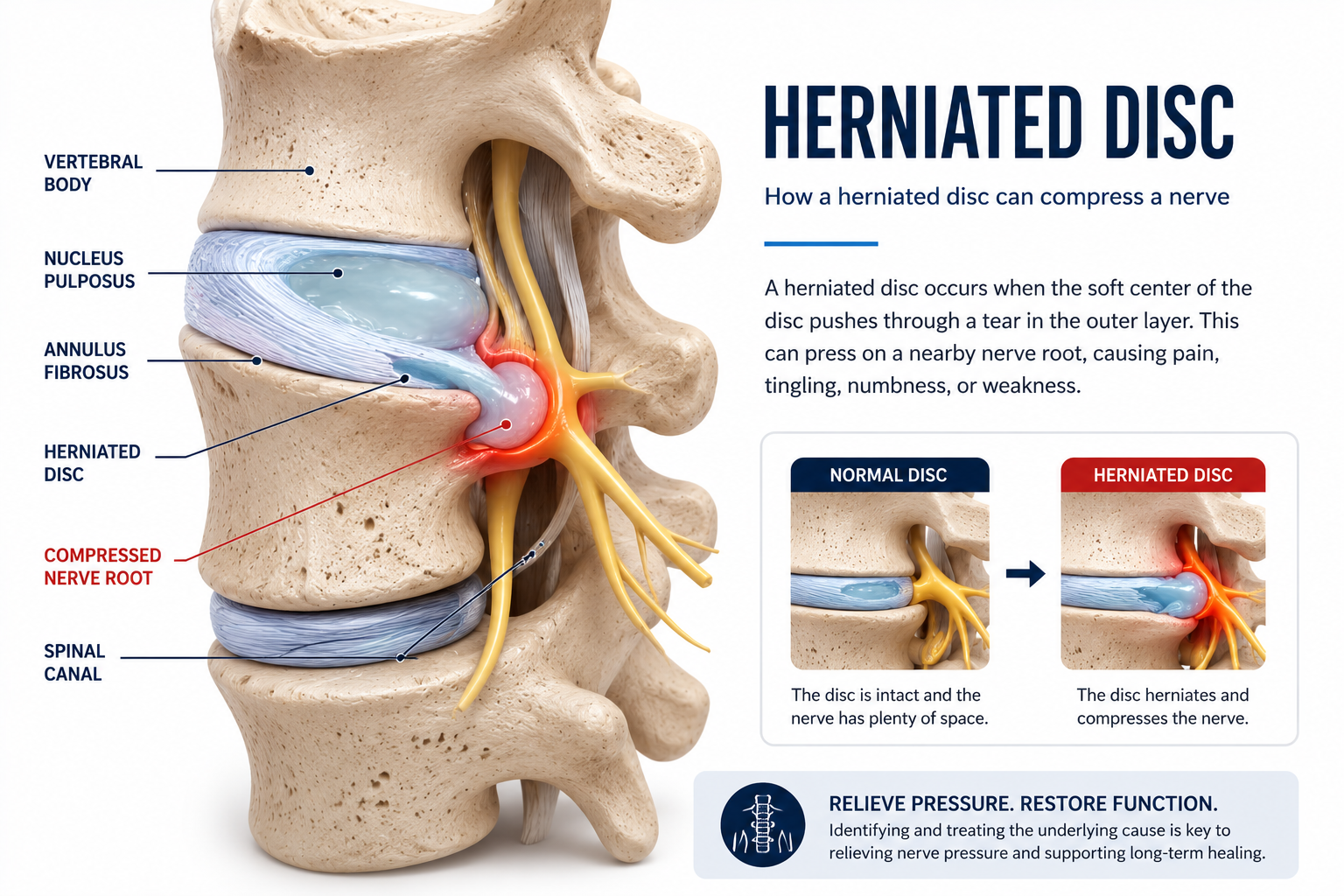
Sometimes the problem isn't the nerve itself—it's the structure compressing it.
Recovery may take much longer if the nerve is being irritated by:
If the source of compression remains, symptoms often continue even if inflammation temporarily decreases.
Recovery depends on the cause and severity.
Mild compression
Moderate compression
More severe compression
Nerves heal slowly, so gradual improvement is completely normal.
While there isn't a way to "speed up" nerve healing itself, reducing the pressure on the nerve often allows recovery to occur more efficiently.
Helpful strategies include:
The goal is to reduce the mechanical stress causing the nerve irritation rather than simply masking symptoms.
Seek evaluation if:
Sudden loss of bowel or bladder control, severe weakness, or numbness around the groin should be treated as a medical emergency.
If the pinched nerve is related to joint dysfunction, spinal restriction, poor movement patterns, or disc-related irritation, chiropractic care may help reduce the mechanical stress contributing to the problem.
At Western New York Spine & Chiropractic, treatment begins with a thorough examination to determine what's causing your symptoms. Depending on your condition, your care plan may include:
The goal is to improve spinal motion, reduce unnecessary pressure on irritated nerves, and help your body move more comfortably.
Signs of improvement include less pain, reduced tingling or numbness, improved strength, and symptoms affecting a smaller area than before.
Most do not. However, prolonged compression without treatment may increase the risk of lasting nerve damage, which is why persistent symptoms should be evaluated.
Light movement is often beneficial, but exercises that reproduce or worsen your symptoms should be avoided until you've been evaluated.
Not exactly. Sciatica is a type of pinched nerve that affects the sciatic nerve, usually because of compression in the lower back.
Many pinched nerves improve naturally once pressure on the nerve is relieved. However, if symptoms persist, become more severe, or begin affecting your strength or daily activities, it's important to determine the underlying cause rather than simply waiting for it to improve.
An accurate diagnosis can help guide the most effective treatment and reduce the risk of long-term nerve irritation.