
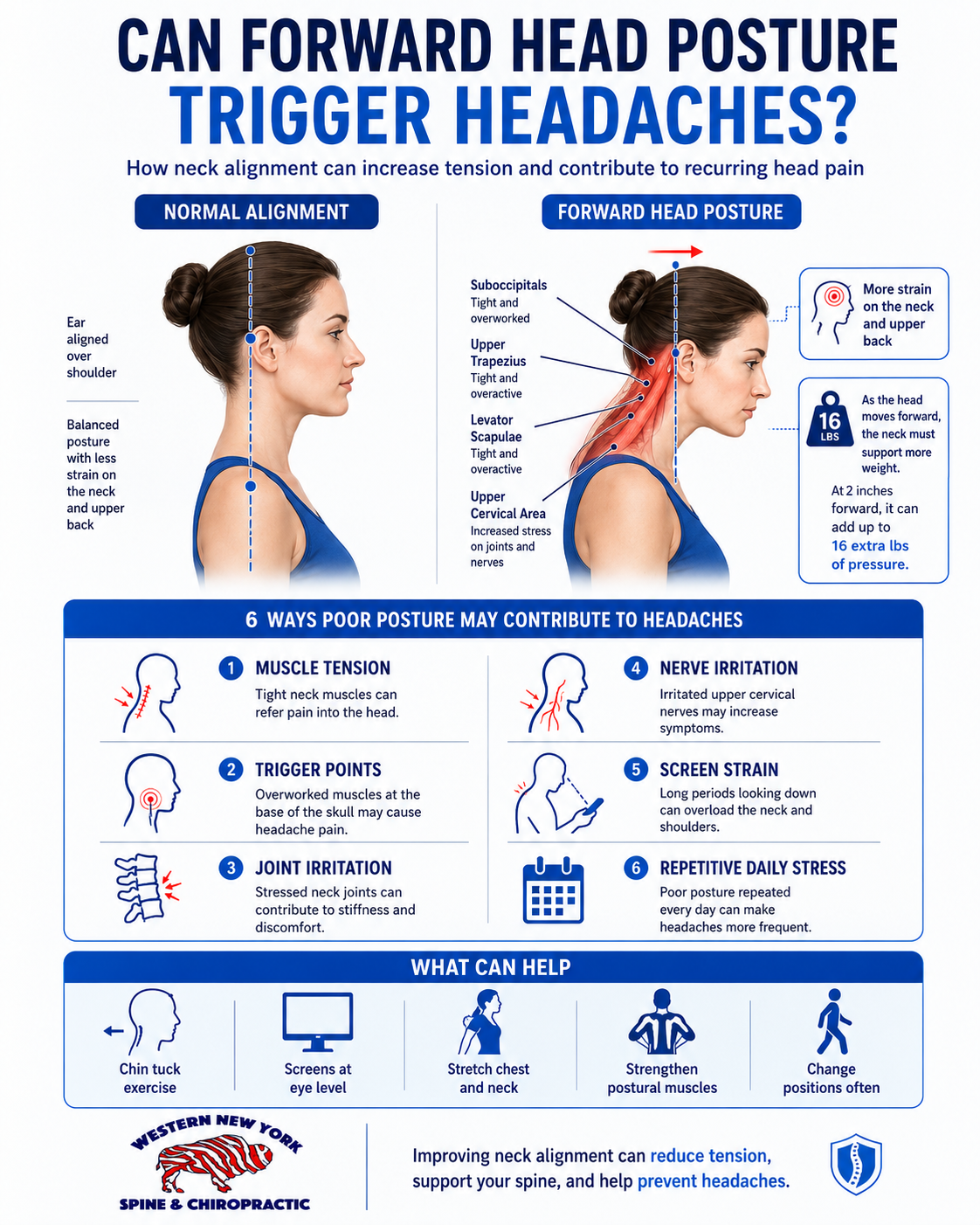
Yes, poor posture can contribute to headaches. When your head drifts forward, your shoulders round, or you spend long periods looking down at a phone or screen, the muscles in your neck and upper back have to work harder to hold your head up.
Over time, that added strain can lead to tension, stiffness, and headache pain. Posture-related headaches often develop gradually. You may notice a dull ache at the base of the skull, pain behind the eyes, or tension that starts in the neck and creeps upward into the head.
Poor posture is not the only cause of headaches, but it is a common and often overlooked contributor.
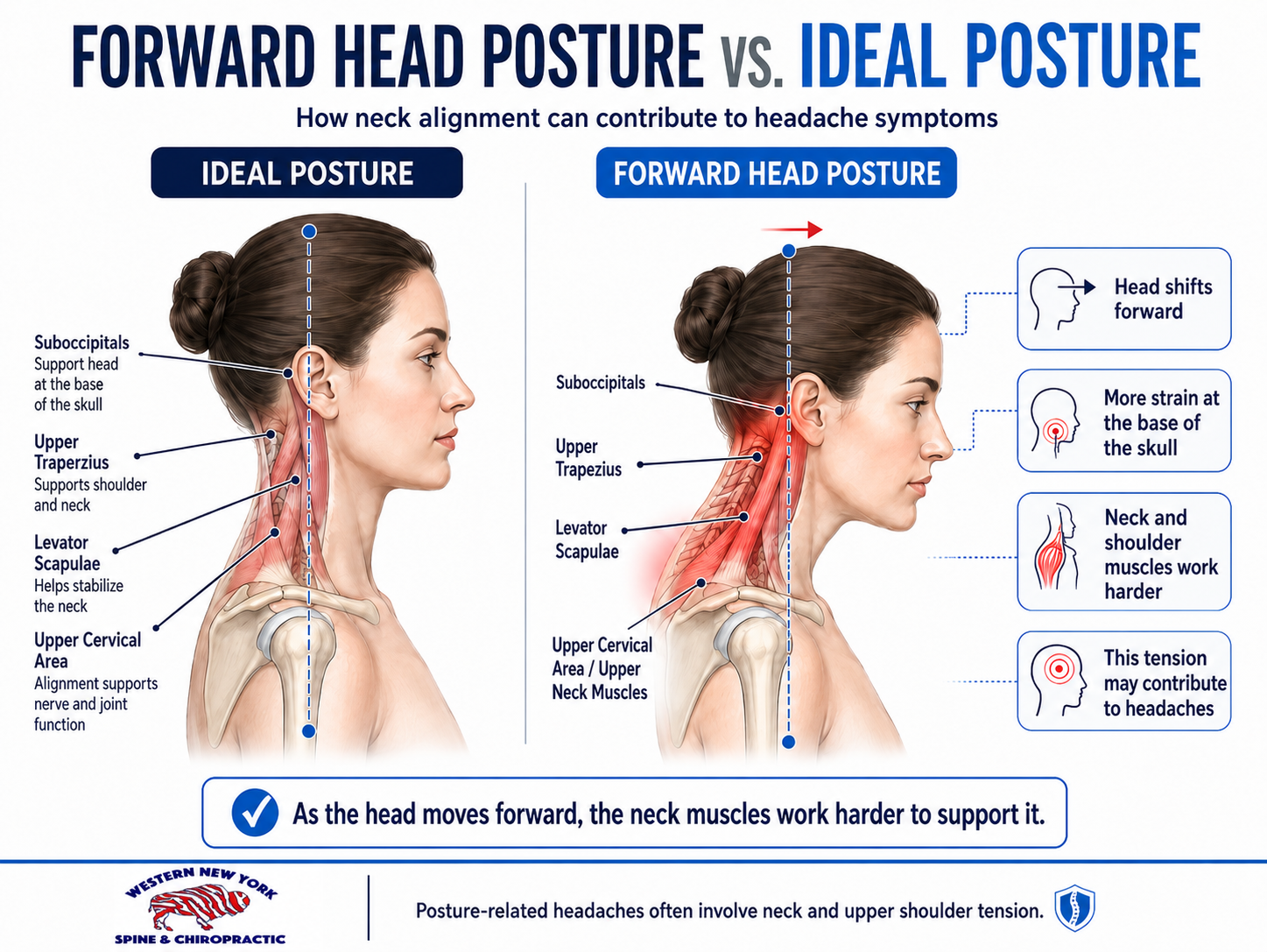
The head, neck, shoulders, and upper back work together. When one area falls out of alignment, the others often compensate.
Forward head posture is one of the biggest problems. This happens when the head sits in front of the shoulders instead of being stacked over them. Even a small forward shift increases the load on the muscles at the base of the skull and along the back of the neck. Those muscles can become tight, irritated, and overworked.
Rounded shoulders and slouching can make the issue worse. As posture breaks down, the upper back stiffens, the chest tightens, and the neck has to strain even more to keep the head upright. That tension can refer pain into the scalp, forehead, temples, or behind the eyes.
In some people, posture-related strain may contribute to headaches and migraine-like symptoms, tension headaches, cervicogenic headaches, and increased headache frequency during desk work or phone use.
Not every headache is caused by posture, but certain patterns make posture more likely.
Signs your headaches may be posture-related include:
Some people also notice jaw tension, upper back discomfort, or a “heavy head” feeling by the end of the day. If symptoms include numbness, tingling, or pain traveling into the arm, a pinched nerve may also need to be considered.
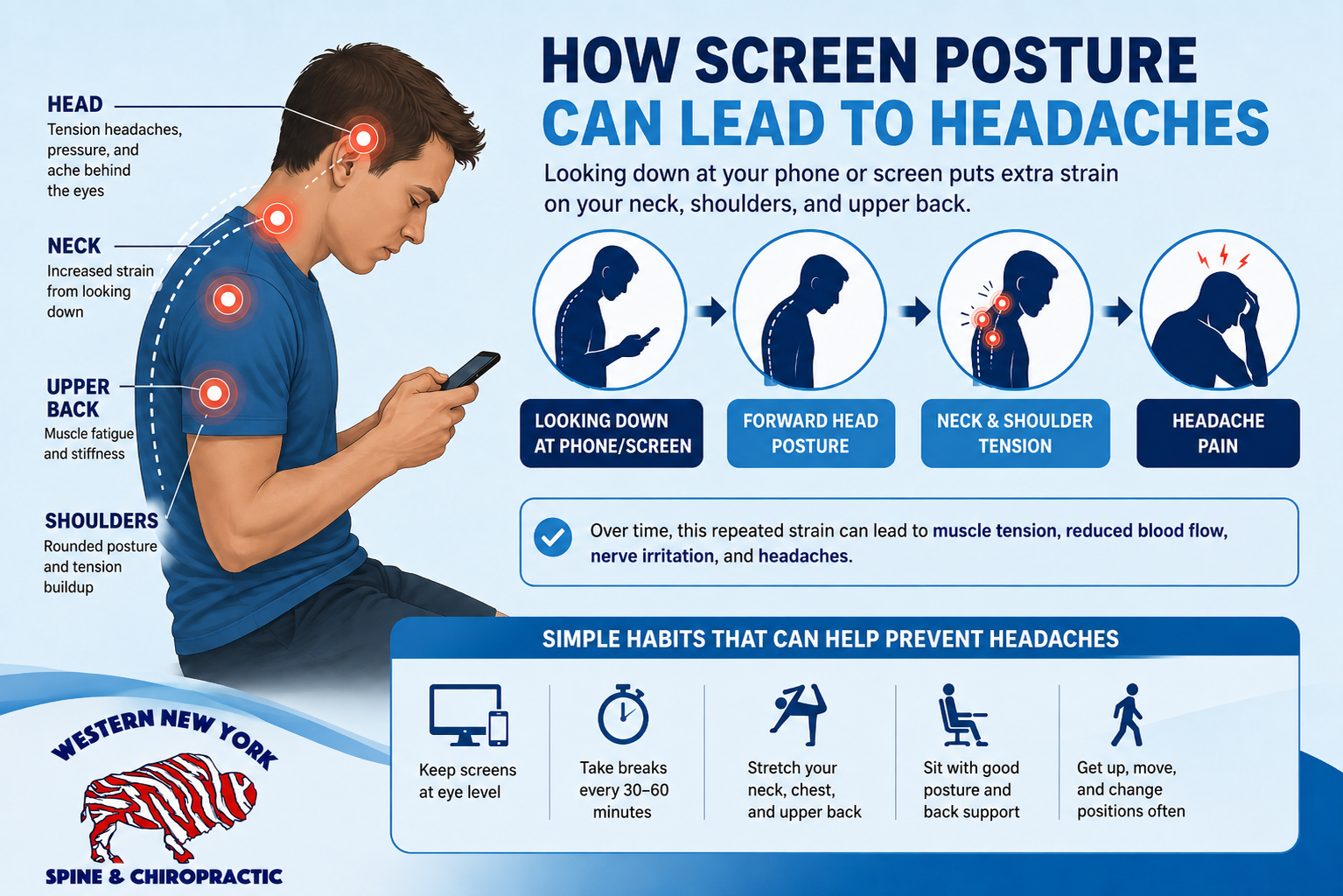
Modern posture problems are often tied to devices.
Looking down at a phone for long periods places extra stress on the neck. Slouching over a laptop or leaning toward a monitor can also strain the upper spine and shoulder muscles. Over time, those positions can feed into recurring headache patterns.
This does not mean phones or computers directly cause every headache. The problem is usually the combination of prolonged sitting, forward head posture, rounded shoulders, reduced movement, and repetitive strain through the neck and upper back.
That is why many people feel better when they stand up, stretch, reset their posture, or step away from the screen.
A few common habits tend to keep this cycle going:
These habits are common, but they are also adjustable. Small changes throughout the day can reduce strain before symptoms build up.
You do not need perfect posture every second of the day. What helps most is reducing repeated strain and building better daily habits.
A few strategies that may help include:
Many people also benefit from hands-on care and guided treatment when the problem has been building for a while.
At Western New York Spine & Chiropractic, treatment for posture-related headaches may include spinal manipulation, manual therapy, postural correction therapy, and movement or ergonomic guidance.
The goal is to reduce tension, improve alignment, and help the neck and upper back move more comfortably.
Even if posture seems like part of the problem, it is important not to ignore headaches that are unusual, severe, or changing.
You should seek evaluation if you have:
If your headaches seem tied to poor posture, neck tension, or prolonged screen use, getting the neck and upper back evaluated may help you figure out what is actually driving the problem.
Can poor posture really cause headaches?
Yes. Poor posture can strain the neck, shoulders, and upper back. That tension may refer pain into the head and contribute to recurring headaches.
What does a posture headache feel like?
It often feels like a dull ache, pressure, or tightness that starts in the neck or base of the skull and moves into the head, temples, forehead, or behind the eyes.
Can looking down at my phone trigger headaches?
It can contribute. Looking down for long periods encourages forward head posture, which can increase neck tension and make headaches more likely.
Can chiropractic care help posture-related headaches?
Chiropractic care may help when headaches are related to neck tension, restricted spinal movement, poor posture, or muscle strain.
When should headaches be checked right away?
A sudden severe headache, headache after injury, headache with fever or confusion, or headache with weakness, numbness, or vision changes should be evaluated promptly.
If your headaches tend to build during the workday, start in the neck, or show up after long periods at a desk or on your phone, posture may be playing a bigger role than you realize.
Western New York Spine & Chiropractic helps patients in Buffalo evaluate headache patterns connected to headaches and migraines, neck pain, poor posture, stress, and upper spinal tension.
If your symptoms are recurring or starting to affect your day-to-day life, contact us to schedule a consultation.