
After a car accident, it is common to feel shaken up but physically okay at first. You may check yourself for obvious injuries, exchange information, drive home, and assume you got lucky.
But pain after a car accident does not always show up immediately.
Neck pain, back pain, headaches, shoulder tightness, and stiffness can develop hours or even days later. That does not mean every accident causes a serious injury. It means your body may need time to react to the sudden force, muscle guarding, inflammation, or joint irritation from the crash.
So, should you see a chiropractor after a car accident even if you feel fine?
In many cases, it is a good idea to get evaluated, especially if the accident involved a sudden stop, rear-end impact, airbag deployment, or any twisting movement through your neck or back. A chiropractic evaluation can help identify musculoskeletal issues early and guide you on what to watch for.
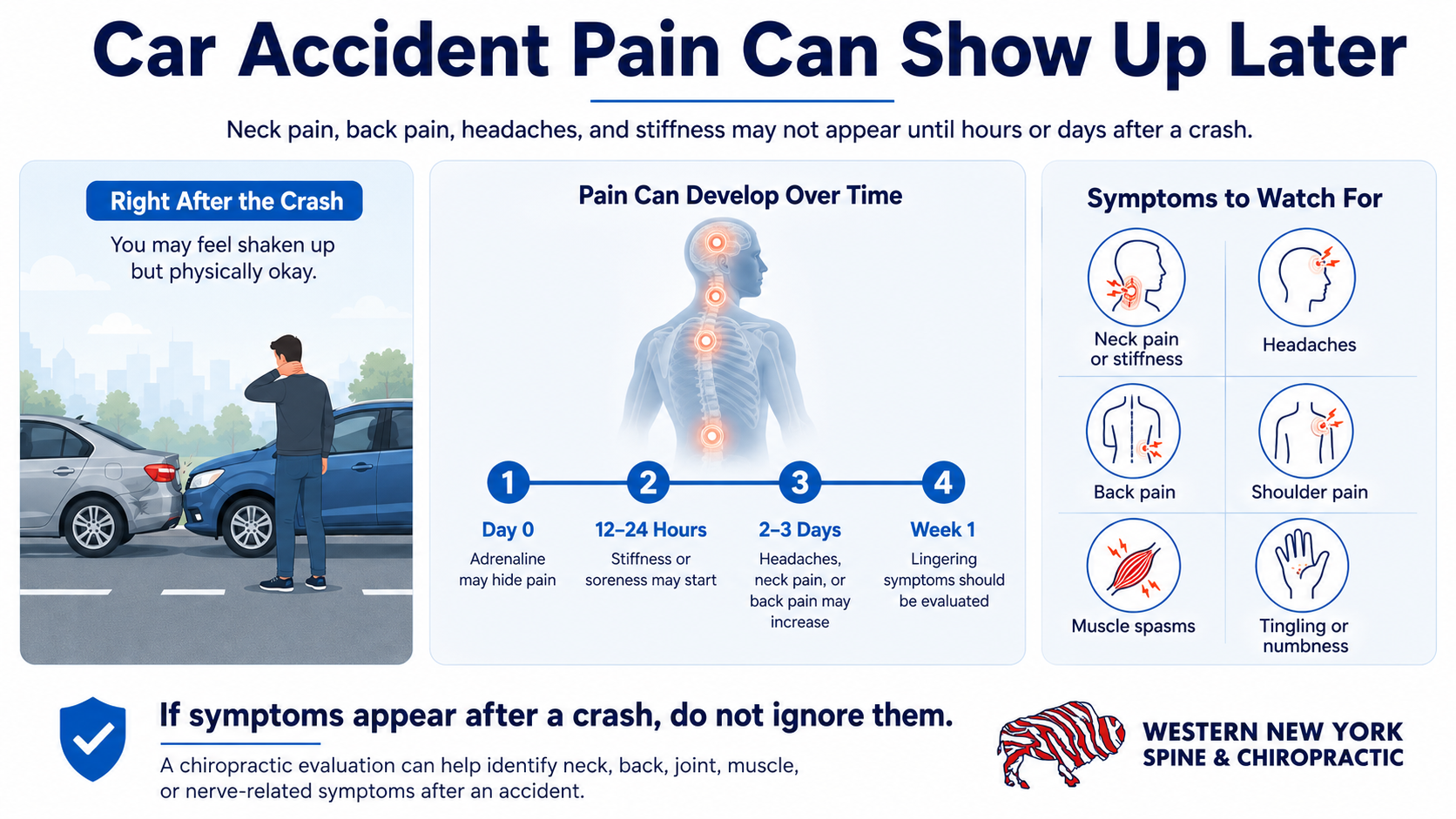
Immediately after a crash, your body may be in a heightened stress response. Adrenaline, shock, and the urgency of the situation can make it harder to notice pain right away.
You may also be focused on checking on other people, talking to police or insurance, moving your vehicle, getting home, or figuring out what just happened.
Once things settle down, symptoms can become more noticeable. Cleveland Clinic notes that whiplash symptoms may begin right after a crash, but others can take at least 12 hours, a full day, or even a few days to appear. NHS also notes that whiplash symptoms can take several hours to start after injuring the neck.
That delay is one reason you should not assume that no pain right now always means no injury.
Some car accident symptoms are obvious right away. Others develop gradually.
Symptoms to watch for include neck pain, neck stiffness, headaches, shoulder pain, upper back pain, lower back pain, muscle spasms, pain between the shoulder blades, jaw pain, dizziness, numbness or tingling, pain traveling into the arm or leg, difficulty turning your head, or pain that worsens with movement.
Whiplash is one of the most common injuries associated with car accidents. Mayo Clinic Health System lists neck pain and stiffness, loss of range of motion, headaches, tenderness in the shoulders or upper back, arm tingling or numbness, fatigue, and dizziness among possible whiplash symptoms.
Some symptoms are obvious right away. Others can appear later as muscle guarding, stiffness, inflammation, or nerve irritation becomes more noticeable.
Even a low-speed accident can place sudden force through the body. Your head, neck, shoulders, spine, and hips may move faster than your muscles can control.
That quick movement can irritate the neck joints, back joints, muscles, ligaments, tendons, discs, and nerves.
A rear-end collision is a common example. The body may be pushed forward while the head and neck lag behind, then rebound in the opposite direction. That motion can strain the soft tissues of the neck and upper back.
This is why someone can walk away from a crash and still feel pain the next day.
If you are dealing with neck pain after an accident, our article on how to treat whiplash from a car accident goes deeper into whiplash symptoms and care options.
A chiropractor can help with many musculoskeletal symptoms after a car accident, but some situations need urgent medical care first.
Seek emergency medical care if you have loss of consciousness, severe headache, confusion, vomiting, chest pain, trouble breathing, severe abdominal pain, weakness, numbness or tingling, trouble walking, loss of balance, vision changes, slurred speech, loss of bladder or bowel control, or severe neck or back pain after trauma.
Mayo Clinic recommends seeing a healthcare professional if you have neck pain or other whiplash symptoms after a car accident, sports injury, or other injury, because a quick diagnosis can help rule out broken bones or other damage.
If symptoms are sudden, severe, neurological, or associated with a major crash, get medical care right away. Chiropractic care should not replace emergency evaluation when red flags are present.
Chiropractic care can help with many neck, back, and soft tissue symptoms after an accident, but some symptoms need urgent medical evaluation first.
Once emergency concerns have been ruled out, a chiropractor may be helpful if you develop pain, stiffness, limited movement, or recurring discomfort after the accident.
You may want to schedule a chiropractic evaluation if you notice neck pain that starts later that day or the next morning, back pain after the accident, headaches that begin after the crash, shoulder or upper back tightness, pain between the shoulder blades, muscle spasms, difficulty turning your head, pain when sitting, driving, or sleeping, tingling into the arm or leg, or pain that keeps returning after you try to wait it out.
If you already have symptoms, you can also read more about pain after a car accident and what it can mean.
A chiropractic evaluation after a car accident is not just about whether your neck or back hurts. It is about understanding how the accident affected your movement, posture, soft tissue, and spinal mechanics.
At WNY Spine & Chiropractic, an evaluation may include checking neck range of motion, back range of motion, muscle tightness or guarding, joint mobility, postural changes, areas of tenderness, headache patterns, shoulder and upper back tension, signs of nerve irritation, and how symptoms change with movement.
The goal is to determine whether your symptoms appear to be related to joint restriction, muscle strain, soft tissue irritation, posture changes, nerve involvement, or another issue that needs referral.
Depending on the findings, care may include spinal manipulation, manual therapy, interferential stimulation therapy, ultrasound and stim combo, or home care guidance.
A post-accident evaluation looks at more than where it hurts. The goal is to understand how the crash affected your movement, posture, soft tissue, joints, and nerve-related symptoms.
We look at how comfortably you can turn, bend, extend, and move without sharp pain or restriction.
Tightness, spasms, and protective tension can develop after impact and may limit normal movement.
We assess areas of spinal or rib restriction that may be contributing to pain, stiffness, or poor motion.
After a crash, people often sit, drive, sleep, or stand differently to avoid discomfort.
Headaches after a crash may be connected to neck tension, whiplash-related strain, or other factors.
Tingling, numbness, burning, weakness, or pain traveling into an arm or leg should be evaluated carefully.
Some people wait weeks after a car accident because they hope the pain will go away on its own. Sometimes it does. But if pain, stiffness, headaches, or limited motion continue, waiting too long can allow compensation patterns to build.
For example, you may turn your whole body instead of your neck, sleep differently to avoid pain, tense your shoulders without realizing it, avoid normal movement, sit or drive in a guarded position, or cause one painful area to make another area work harder.
Over time, the original irritation may become harder to separate from the compensation around it.
This does not mean you need aggressive care immediately after every minor accident. It means recurring or delayed symptoms should be evaluated instead of ignored.
If your symptoms include neck pain, headaches, or stiffness, the condition pages for whiplash, neck pain, and headaches and migraine may also be useful.
A minor accident does not always mean a minor body response.
People can have symptoms after a low-speed crash, especially if they were turned, bracing, looking down, looking sideways, or caught off guard during impact. The angle of the crash, head position, seat position, prior injuries, and overall spinal health can all affect how your body responds.
You may not need ongoing treatment after a minor accident. But if symptoms appear, a chiropractor can help determine whether the pain is likely coming from the neck, back, muscles, joints, or nerve irritation.
If you truly have no pain, no stiffness, no headaches, no movement restriction, and no concerning symptoms, you may not need immediate chiropractic treatment.
However, it can still be reasonable to schedule an evaluation if the crash involved significant force, you were rear-ended, your head or body twisted during impact, you already have a history of neck or back pain, you feel off even without clear pain, you are worried symptoms may develop, or you want a baseline assessment after the accident.
At minimum, pay close attention to how you feel over the next several days. If neck pain, back pain, headaches, stiffness, or radiating symptoms show up, do not ignore them.
If you are not dealing with emergency symptoms, keep things simple.
You can monitor symptoms for delayed pain or stiffness, avoid heavy lifting right away, move gently instead of staying completely still, avoid aggressive stretching into sharp pain, use ice or heat based on what feels better, pay attention to headaches, dizziness, tingling, or weakness, seek evaluation if symptoms appear or worsen, and follow medical advice if you were seen at urgent care or the ER.
NHS says whiplash usually gets better within 2 to 3 months, but symptoms can include neck pain, stiffness, headaches, and pain or spasms in the shoulders and arms. Mayo Clinic notes that whiplash treatment goals include controlling pain, restoring range of motion, and helping people return to normal activities.
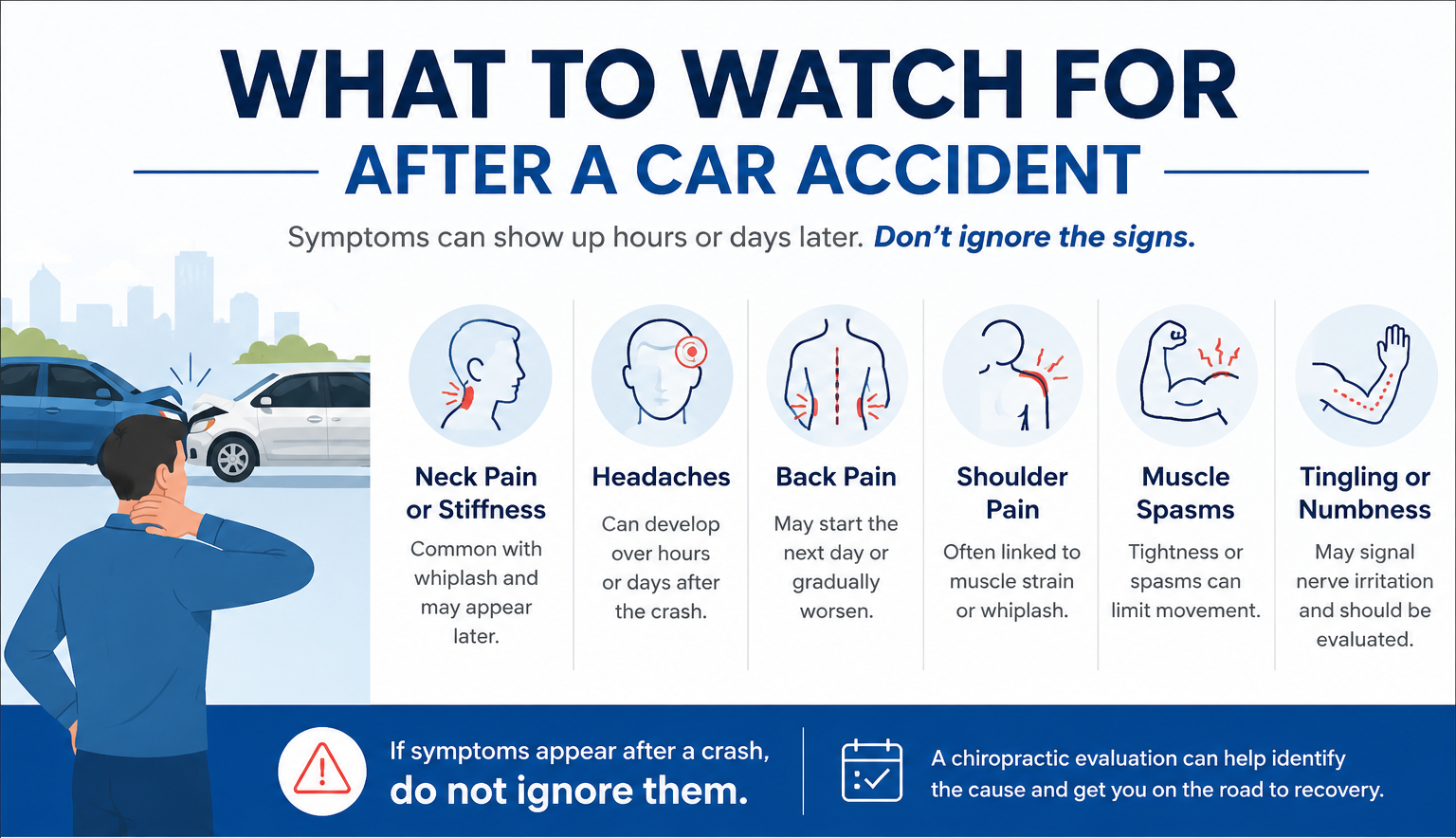
You do not have to feel severe pain right away for a car accident to affect your neck or back. Symptoms like whiplash, headaches, stiffness, shoulder pain, and back pain can show up hours or days later.
If you have severe symptoms, neurological symptoms, or pain after a major injury, seek medical care right away.
If emergency concerns have been ruled out and you are dealing with neck pain, back pain, headaches, stiffness, or limited movement after a crash, WNY Spine & Chiropractic can evaluate what may be contributing to your symptoms and recommend a care plan based on your needs.